The complete spring pruning guide
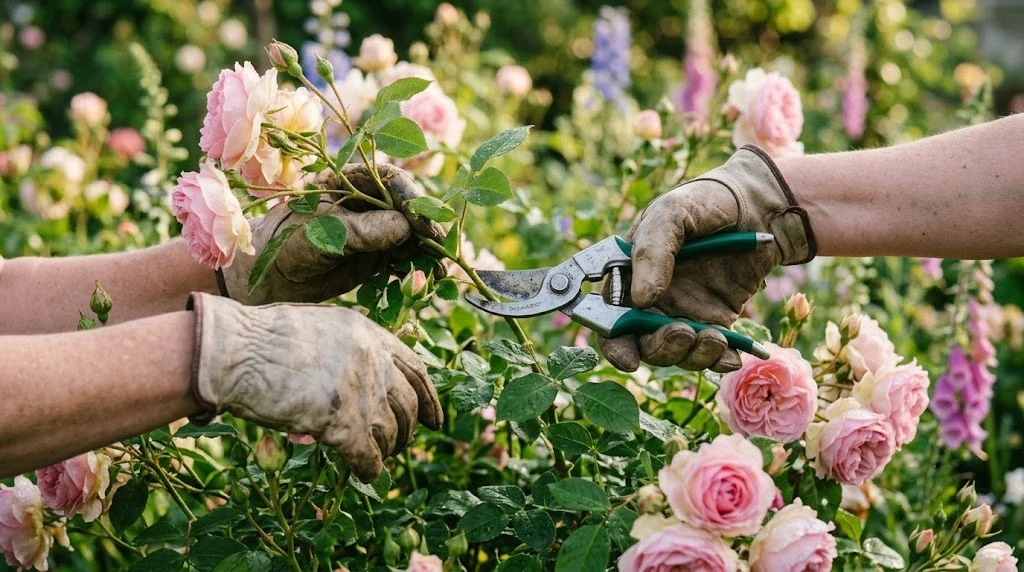
Spring is the moment your garden wakes up — and a few well-placed cuts now set the tone for everything that follows. Prune well and you get stronger stems, more flowers and healthier growth all season. Prune badly, or not at all, and plants grow leggy, tangled and prone to disease. The good news: pruning is far simpler than it looks once you know when, what and how.
Why spring pruning matters
Pruning isn't just tidying up. Removing the right growth redirects a plant's energy into fresh, productive shoots and opens the centre to light and air. That airflow is your best defence against mildew and rot, and the extra light means more buds — and more flowers or fruit. It also lets you shape a plant before the season's growth locks that shape in for months.
When to prune in spring
Timing depends on the plant, but a reliable rule covers most gardens:
- Prune in early spring — summer-flowering shrubs, roses, and anything that blooms on new growth. Cutting now gives them the whole season to grow and flower.
- Wait until after flowering — spring bloomers like forsythia and lilac, which flower on last year's wood. Prune these too early and you'll cut off this year's display.
- Any time — dead, damaged or diseased stems. These come off the moment you spot them, whatever the season.
Choose a dry, mild day. Pruning into wet weather invites disease straight into the fresh cut.
What to cut — and what to leave
Start with the "three Ds": dead, damaged and diseased wood. Removing these alone transforms most plants. From there, take out branches that cross or rub against each other, and any weak, spindly growth that will never amount to much. Step back often — the goal is an open, balanced framework, not a plant cut to the bone. As a guide, never remove more than about a third of a plant in one go.
The three tools that make the difference
You don't need a shed full of equipment — three tools handle almost everything:
- Bypass pruning shears for stems up to roughly finger-thick. The scissor-like action gives a clean cut that heals fast.
- Loppers for branches up to about 4 cm — the long handles give you the leverage secateurs can't.
- A pruning saw for anything thicker, where crushing would damage the plant.
Whatever you use, keep the blades sharp and clean. A sharp blade slices; a blunt one crushes and tears, leaving a wound that's slow to heal. Wipe blades between plants so you're not carrying disease from one to the next.
How to make a good cut
Technique is quick to learn and makes all the difference. Cut about 5 mm above a healthy, outward-facing bud, on a gentle slant away from the bud. That angle sheds water away from the bud, and the outward-facing bud sends new growth outward — keeping the centre of the plant open. Cut too far above the bud and you leave a stub that dies back; too close and you damage the bud itself.
The takeaway
Prune with confidence: remove the three Ds, open the plant to light and air, cut cleanly above an outward-facing bud, and never take more than a third at once. Do that with a sharp, clean pair of shears and your garden will reward you with a fuller, healthier, more colourful season.