Watering the right way: less water, greener garden
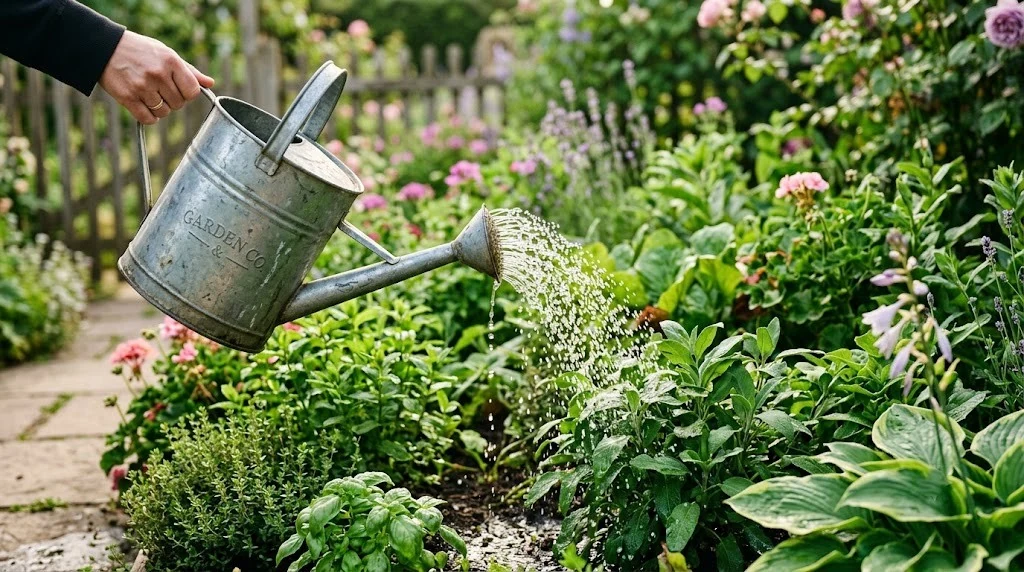
Here's the surprise most gardeners never hear: the majority of struggling plants aren't thirsty — they're drowning. Watering little and often keeps roots shallow and lazy, wastes water, and quietly invites rot and disease. Water the right way and you'll use less water while your garden looks greener and copes far better with a hot, dry spell.
Water deeply, not often
The single biggest change you can make is to water deeply and less frequently. A quick daily splash only wets the top few centimetres, so roots stay near the surface where they dry out fast. A long, thorough soak two or three times a week drives water deep into the soil, and roots follow it down. Deep roots reach moisture the surface has lost — so the plant stays happy for longer between waterings and shrugs off dry weather.
Water in the early morning
Timing matters more than people think. Water early in the morning, before the day heats up. The soil takes the water in before the sun can evaporate it, and any splashes on the leaves dry quickly in the morning air. Evening watering is second-best — it works, but leaves that stay wet overnight are an open invitation to mildew and fungal disease. Midday is the least efficient: much of what you pour simply evaporates before it reaches the roots.
Aim at the base, not the leaves
Plants drink through their roots, so that's where the water belongs. Direct it at the base and let it soak into the soil, rather than showering the foliage. Wet leaves don't help the plant and, left sitting, encourage disease. Watering at the base also delivers every drop where it's useful instead of losing it to the air.
The right tools for the job
Good tools make consistent watering effortless:
- A watering can with a rose head gives gentle, controlled watering for pots, seedlings and small beds — the fine spray won't wash out soil or flatten young plants.
- A hose with a reel keeps things tidy and reaches the whole garden. A trigger nozzle lets you switch from a soft shower to a targeted stream in a second.
- A drip or soaker system is the gold standard for beds and borders — slow, deep watering straight to the roots with almost no waste, and easy to put on a timer.
Read your plants
Your plants will tell you when the balance is off. Wilting in the cool of the morning usually means genuine thirst. Yellowing lower leaves, soft stems or a constantly soggy surface point the other way — to too much water. When in doubt, check the soil rather than the sky, and remember that most plants recover from a little dryness far more easily than from waterlogged roots.
The takeaway
Water deep and less often, early in the day, at the base of the plant — and let the soil, not the calendar, tell you when. Do that and you'll water less, spend less, and watch your garden grow greener and tougher all summer long.